
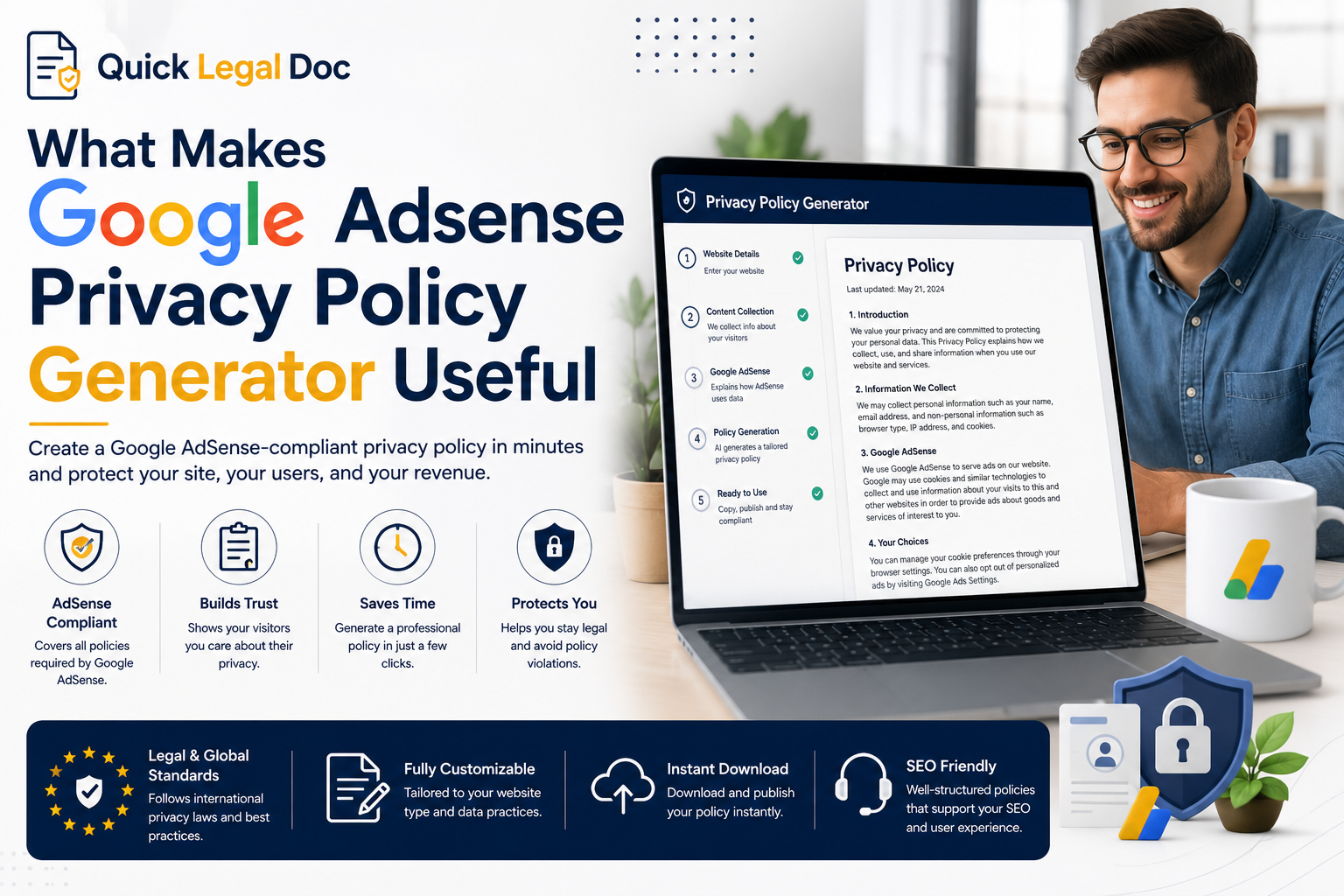
If you run a website, a blog, a store, a portfolio, a free tool, you need a privacy policy for AdSense. Not someday. Now. It is one of those pages visitors rarely read but everyone expects to find, and skipping it can cost you real money: Google will not approve your site for AdSense without one, and privacy laws in several states now require one outright.
This guide explains what a privacy policy for AdSense must cover, why AdSense treats it as a gatekeeper for approval, and how to write a privacy policy for AdSense without overcomplicating it.
What a Privacy Policy Actually Is
A privacy policy for AdSense is a public statement explaining what information your website collects from visitors, how you use it, who you share it with, and what choices visitors have. It is part transparency and part trust signal: it tells a stranger you have thought
about their data and take it seriously.
What Your Privacy Policy Must Cover
Every privacy policy, regardless of the site’s size, should address these basics:
- What you collect. Names, email addresses, IP addresses, browsing behavior, payment details, whatever applies. Be specific and honest; do not copy a list from another site.
- How you collect it. Contact forms, account sign-ups, cookies, analytics tools, newsletter subscriptions. Name the methods.
- How you use it. Delivering your service, sending emails, improving the site, showing ads, preventing fraud. State each purpose plainly.
- Who you share it with. Third-party services like analytics providers, payment processors, and ad networks. If you run ads, this section matters a lot (more below).
- User rights. How visitors can request access to, correction of, or deletion of their data, at least at a general level.
- How to contact you. A real email address or contact method for privacy questions.
Write it in plain language. A policy nobody can understand fails at its only job: informing people.
Cookies, Analytics, and Advertising: Be Specific
This is where most small-site privacy policies fall short. If your site uses cookies, and it almost certainly does, say so. If you use Google Analytics, name it. If you display ads through Google AdSense or any ad network, name that too, because ad networks collect data through cookies and similar technologies.
Google actually requires AdSense publishers to disclose specific information in their privacy policy for AdSense: that third-party vendors use cookies to serve ads, how users can opt out of personalized advertising, and similar details. A generic line about “we may use cookies” does not cut it. Name your vendors, link to their privacy information, and explain what visitors can do about it.
Why Google AdSense Requires a Privacy Policy Before Approval
Google AdSense puts ads from thousands of advertisers on your site, and those ads involve data collection. Because Google is on the hook for how that data is handled, it holds publishers to a standard, and a clear privacy policy is a non-negotiable part of it.
During the AdSense review, Google checks that your site is complete and trustworthy. A missing privacy policy is one of the most common reasons applications get held up or rejected, because it signals the site is not ready for a professional ad relationship. You can read the full requirements in Google’s AdSense Program policies, the privacy disclosure rules for publishers are spelled out there.
The practical takeaway: if you plan to monetize with AdSense, publish your privacy policy for AdSense before you apply, not after. It is one of the easiest approval factors to get right.
GDPR and CCPA: What They Are in Plain Language
You will hear two acronyms constantly in privacy discussions. Here is what they mean at a high level:
- GDPR (General Data Protection Regulation) is the European Union’s privacy law. Broadly, it gives people in the EU rights over their personal data, to know what is collected, to access it, to delete it, and sets rules for businesses that handle that data. If your site gets visitors from Europe, it is relevant to you.
- CCPA (California Consumer Privacy Act) is California’s privacy law. It gives California residents similar rights, to know what personal information is collected, to delete it, and to opt out of its sale or sharing, and applies to businesses above certain size thresholds.
Neither law is satisfied by a boilerplate page alone; compliance depends on what your site actually does with data. A good privacy policy is a starting point, not a certificate. For specifics about your obligations, consult an attorney, this guide describes the landscape, not your legal duties.
How to Write a Privacy Policy for AdSense Without Overcomplicating It
You do not need to hire a lawyer to produce a solid first draft of your privacy policy for AdSense. Follow this process:
- Inventory your site. List every way you collect data: forms, comments, analytics, ads, email tools, payment processors.
- Write one section per topic from the list above, in plain sentences. “We collect your email address when you subscribe to our newsletter. We use it to send you updates.” That is the right level.
- Name your third parties and link to their privacy pages.
- Add a “last updated” date and review the policy whenever you add a new tool or service.
- Publish it where people can find it, typically linked in the footer of every page.
If you want a head start, a generator can produce a structured draft from your answers about your site. QuickLegalDoc’s free privacy policy generator walks you through the key questions and produces a clean draft you can review and customize.
Frequently Asked Questions
Do I need a privacy policy if my site has no contact form?
Probably yes, if you use analytics, cookies, or ads, which collect data even without a form. And if you ever want AdSense approval, it is required regardless.
Is a privacy policy legally required in the United States?
There is no single federal law requiring every website to have one, but several state laws do require privacy disclosures for covered businesses, and sector-specific rules (like those for children’s sites) apply too. Requirements vary, check the rules for the states where you operate and where your visitors are.
Can I just copy a privacy policy from another website?
No. A copied policy describes someone else’s data practices, which means it misrepresents yours. It can also create legal commitments you did not mean to make. Write your own or generate a draft based on your actual site.
Does using a generator make my policy legally compliant?
A generator produces a solid draft based on the information you provide, it does not guarantee compliance with any specific law. Review the draft, make sure it matches your real practices, and consult an attorney for anything high-stakes.
How often should I update my privacy policy?
Review it whenever you add or remove a tool that touches visitor data, and do a full check at least once a year. Always update the “last updated” date.
Conclusion
A privacy policy for AdSense is a small page with outsized importance. It builds visitor trust, keeps you on the right side of state privacy laws, and, crucially, unlocks AdSense approval. Inventory what your site collects, write it in plain language, name your third parties, and keep it updated. An hour of work now prevents headaches later.
Disclaimer: QuickLegalDoc provides general templates for informational purposes only and is not a law firm. Consult a licensed attorney for advice about your specific situation.